

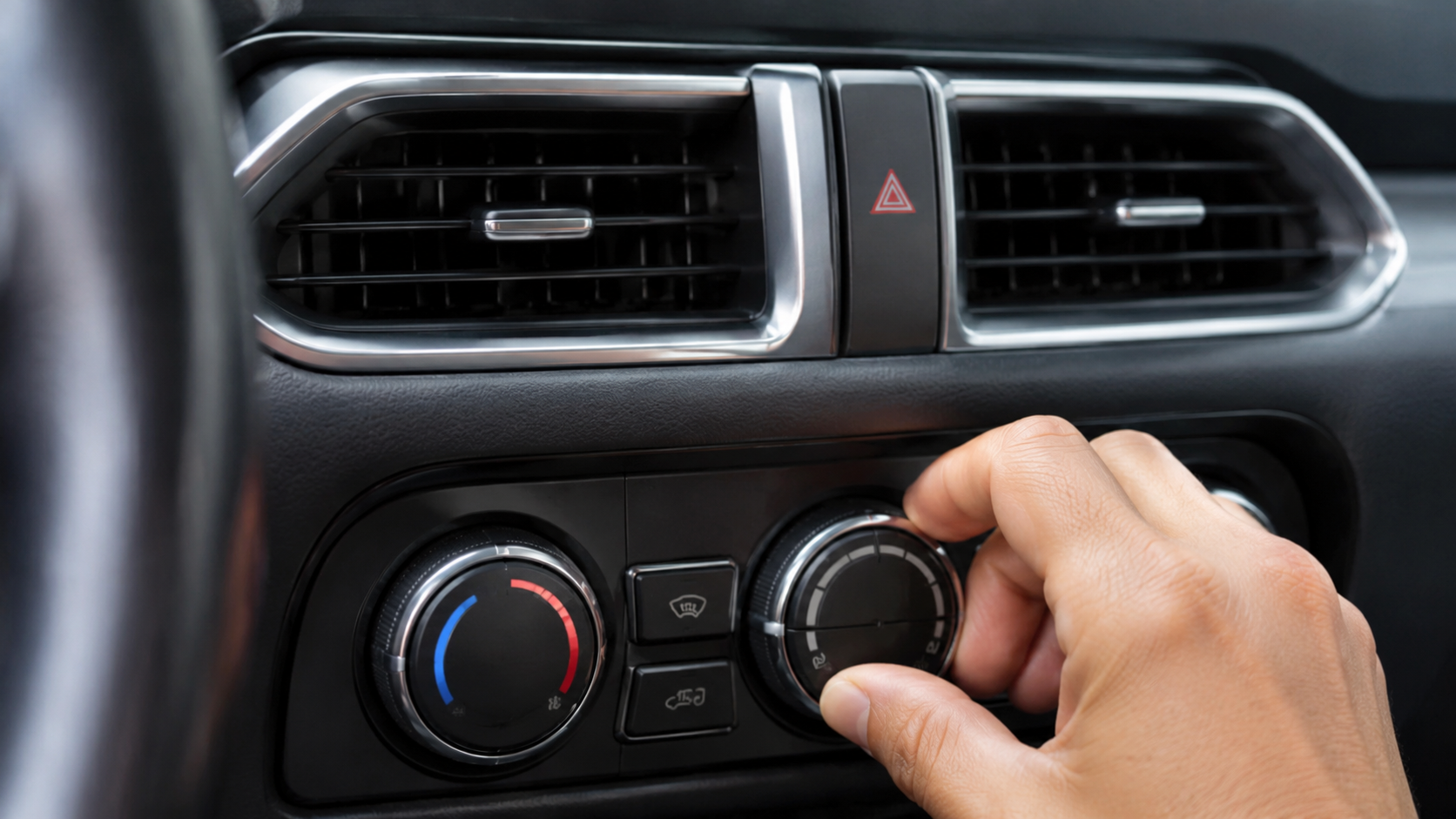
There are few things more frustrating than turning on your car’s air conditioning during a hot day, only to feel warm air coming through the vents. This problem is especially uncomfortable in places like Maricopa, Arizona, where summer temperatures can make a functioning air conditioning system essential for comfortable driving. If you’re experiencing your car AC blowing hot air, there could be several underlying causes, ranging from low refrigerant levels to malfunctioning mechanical components. Understanding these potential problems can help you recognize when your vehicle needs professional attention and prevent minor AC issues from developing into expensive repairs.
In this guide, we’ll explore why your car AC blows hot air, the most common causes of air conditioning problems, how to identify warning signs, and what you can do to restore cold air to your vehicle.
How Does Your Car’s Air Conditioning System Work?
Before examining why your car’s AC might be blowing hot air, it’s helpful to understand how the system operates. Unlike a household air conditioner, your vehicle’s AC system must function efficiently while exposed to changing engine speeds, outdoor temperatures, and driving conditions.
Your car’s air conditioning system uses refrigerant to absorb heat from inside the passenger cabin and release it outside the vehicle. Several components work together to complete this cooling process:
- AC Compressor: Compresses and circulates refrigerant throughout the air conditioning system.
- Condenser: Releases heat from the refrigerant into the outside air.
- Expansion Valve or Orifice Tube: Regulates refrigerant flow and reduces its pressure before it enters the evaporator.
- Evaporator: Absorbs heat from the cabin air, allowing cooler air to circulate through the vents.
- Blower Motor: Pushes air through the HVAC system and into the passenger cabin.
- Refrigerant: Transfers heat throughout the air conditioning system to make cooling possible.
When these components function properly, your vehicle can deliver cool, comfortable air even when temperatures outside are extremely high. However, a problem with any part of the system can reduce cooling performance or cause the AC to stop producing cold air altogether.
10 Common Reasons Your Car AC Is Blowing Hot Air While Driving
Several problems can interfere with your vehicle’s ability to produce cold air. Below are ten common reasons your car AC may be blowing hot air, along with potential solutions.
1. Low Refrigerant Levels or a Refrigerant Leak
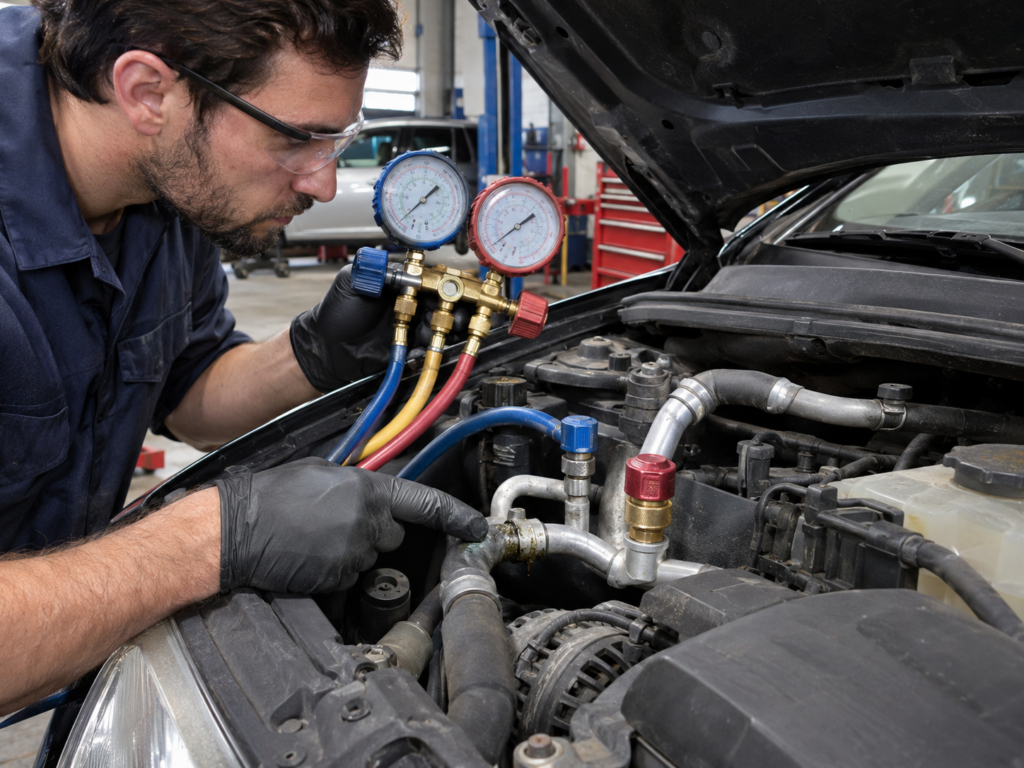
One of the most common reasons for a car AC blowing hot air is insufficient refrigerant. Refrigerant absorbs heat from the cabin and releases it outside the vehicle as it circulates through the air conditioning system.
When refrigerant levels drop too low, the AC system cannot effectively remove heat from the air. Because automotive air conditioning systems are designed to be sealed, low refrigerant levels generally indicate a leak somewhere in the system.
Common warning signs include:
- AC air gradually becoming warmer over time
- Reduced cooling performance during hot weather
- The compressor cycling abnormally or failing to engage
- Oily residue around refrigerant lines or AC components
Potential fix: A professional technician can inspect the system, identify refrigerant leaks, repair damaged components, and recharge the system with the manufacturer-specified refrigerant.
2. A Failing or Damaged AC Compressor
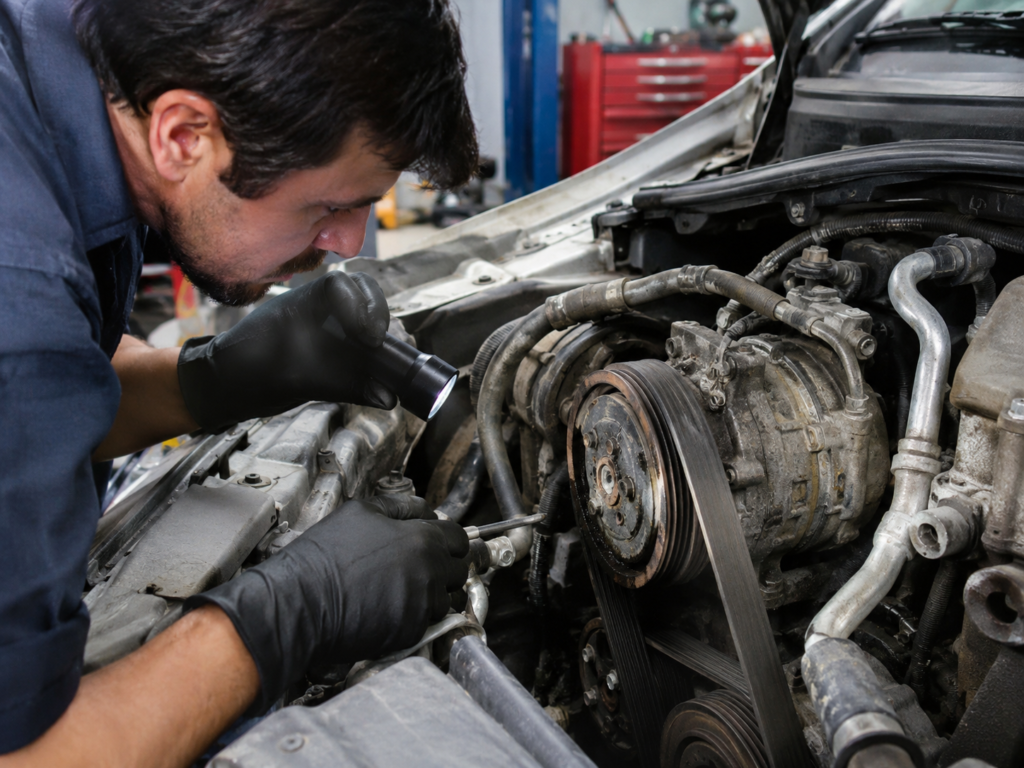
The AC compressor is responsible for circulating refrigerant throughout your vehicle’s air conditioning system. Without a properly functioning compressor, refrigerant cannot move through the system as intended, preventing effective cooling.
Compressors can fail due to internal wear, inadequate lubrication, electrical problems, or damage caused by other AC system issues.
Common warning signs include:
- Warm air coming from the vents despite the AC being on
- Unusual grinding or rattling noises when the AC operates
- The compressor failing to engage when cooling is requested
- Intermittent cooling performance
Potential fix: A technician can evaluate compressor operation, electrical controls, and refrigerant pressures to determine whether a repair or compressor replacement is necessary.
3. A Clogged or Damaged AC Condenser
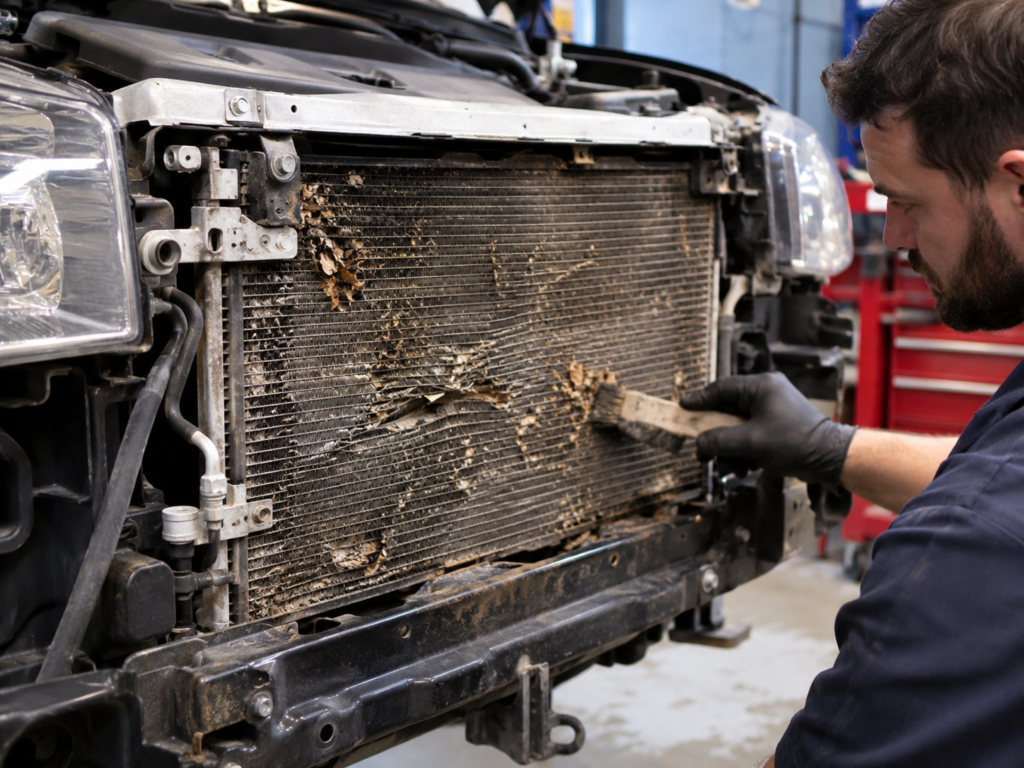
Your vehicle’s AC condenser is typically located near the front of the vehicle, where airflow helps release heat from the refrigerant. If the condenser becomes clogged with dirt, debris, or insects, it may struggle to dissipate heat efficiently.
Physical damage from road debris or corrosion can also cause refrigerant leaks, further reducing cooling performance.
Common warning signs include:
- AC performance declining during hot weather
- Warm air coming through the vents while idling
- Cooling performance improving at highway speeds
- Visible debris or damage around the condenser
Potential fix: Cleaning accumulated debris may restore proper airflow. However, a damaged or leaking condenser generally requires professional repair or replacement.
4. Malfunctioning Condenser or Radiator Cooling Fans
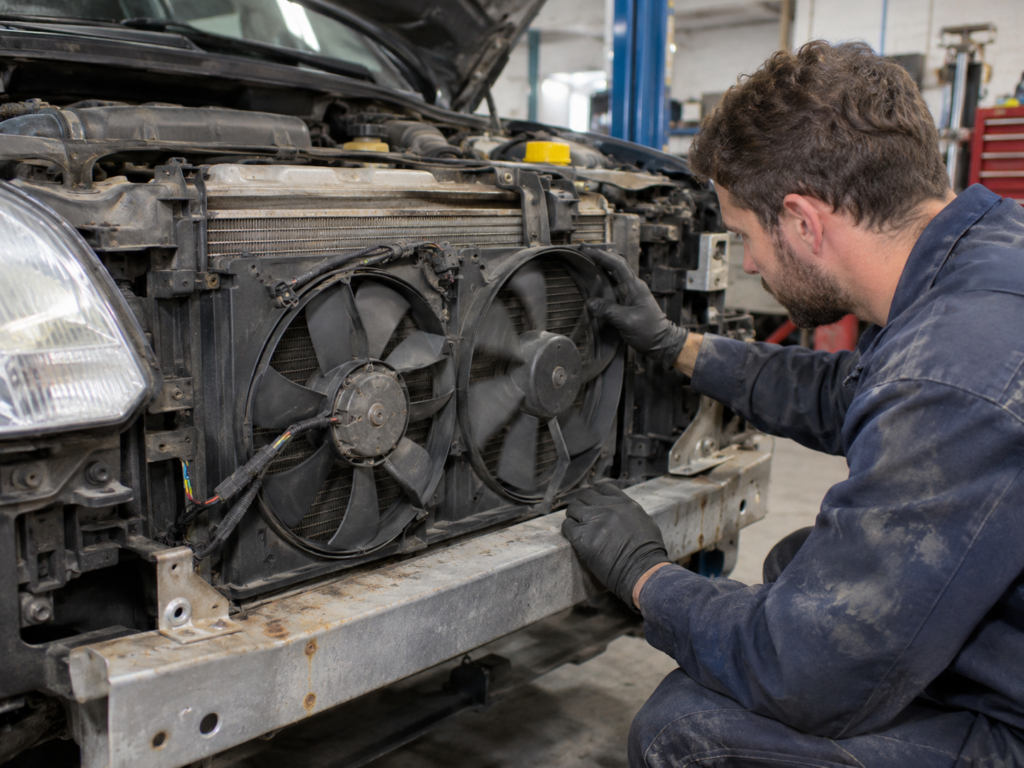
Cooling fans help move air across the condenser, especially when your vehicle is stopped or traveling at low speeds. If these fans stop working, the condenser may not release enough heat to maintain effective air conditioning.
This issue can become particularly noticeable during Arizona summers, when high ambient temperatures place additional demands on your vehicle’s cooling system.
Common warning signs include:
- AC blowing warm air while stopped at traffic lights
- Cold air returning when driving at higher speeds
- Cooling fans failing to operate when needed
- Engine temperatures rising during extended idling
Potential fix: A mechanic can inspect the cooling fan motors, relays, fuses, wiring, and control modules to identify and repair the malfunction.
5. Electrical Problems or Blown Fuses
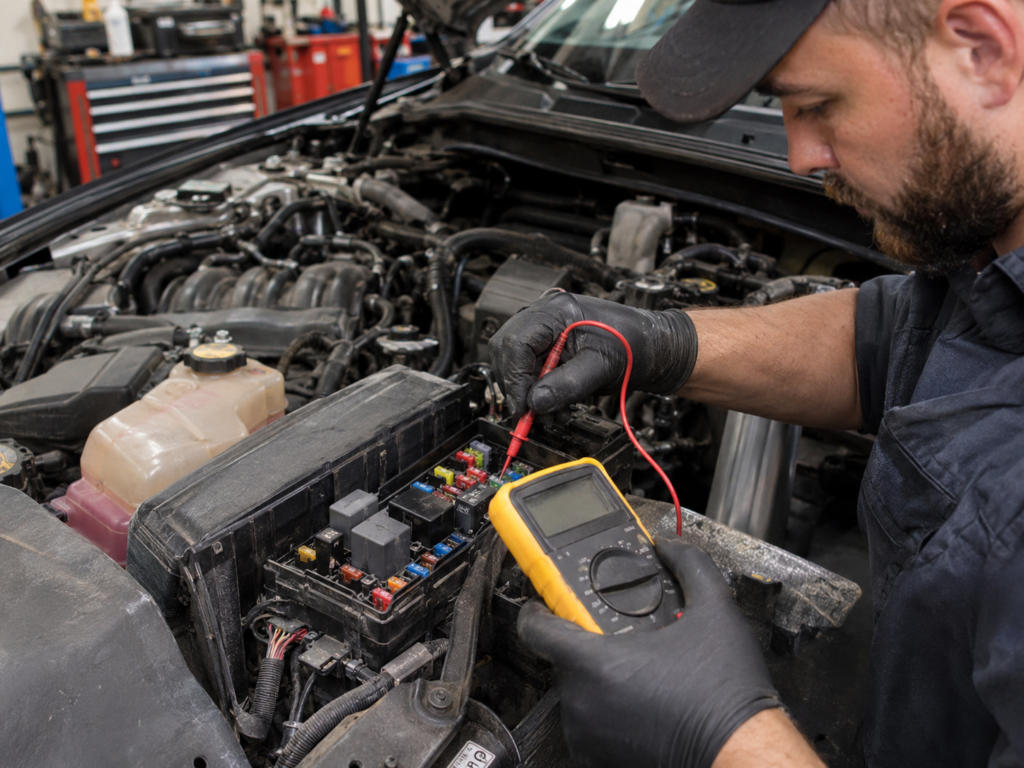
Modern automotive air conditioning systems depend on electrical components to control compressor operation, cooling fans, sensors, and temperature settings.
A blown fuse, damaged wiring connection, faulty relay, or malfunctioning control module can interrupt these functions and prevent the AC from cooling properly.
Common warning signs include:
- AC suddenly stopping without warning
- Compressor failing to engage
- Inconsistent cooling or intermittent operation
- AC controls behaving unpredictably
Potential fix: Professional electrical diagnostics can identify the source of the malfunction. Depending on the problem, repairs may involve replacing a fuse, repairing wiring, or addressing a faulty electrical component.
6. A Faulty Blend Door Actuator
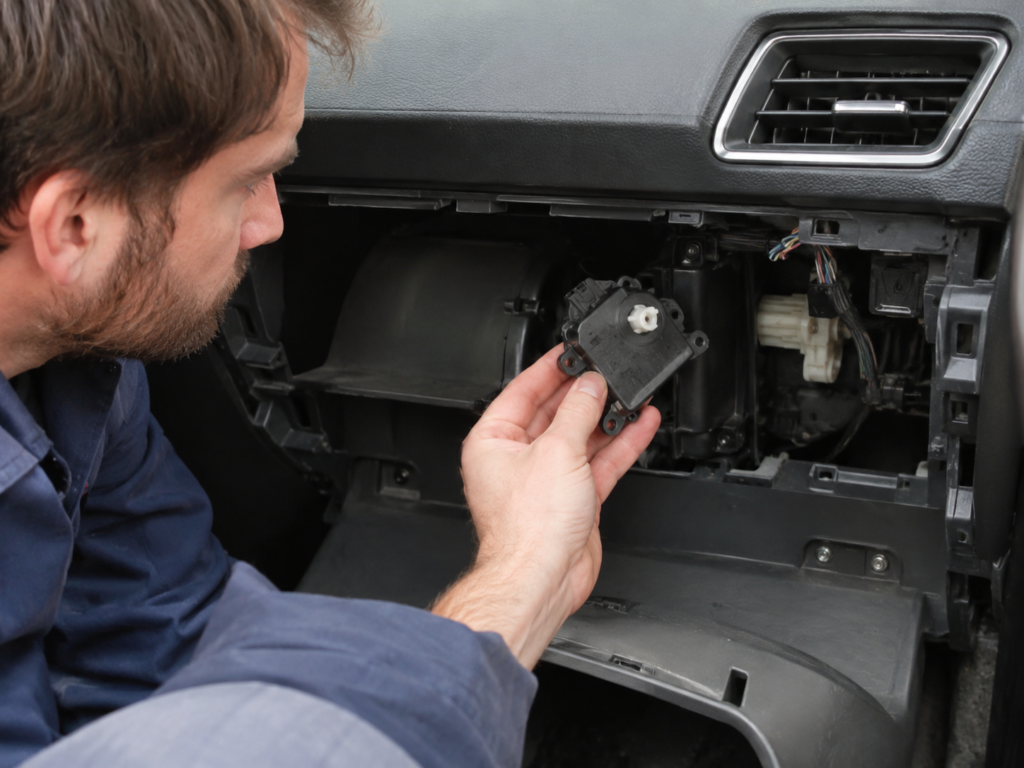
Your vehicle’s HVAC system uses blend doors to regulate the temperature of the air entering the cabin. These doors direct airflow through or around the heater core to achieve the temperature selected on your dashboard.
When a blend door actuator malfunctions, the system may direct heated air through the vents even when the AC is operating correctly.
Common warning signs include:
- Hot air coming from the vents despite selecting the coldest setting
- Clicking or tapping noises behind the dashboard
- Temperature controls failing to respond
- Different temperatures coming from separate vents
Potential fix: A technician can inspect the blend door mechanism and actuator to determine whether recalibration, mechanical repair, or actuator replacement is required.
7. A Clogged Cabin Air Filter
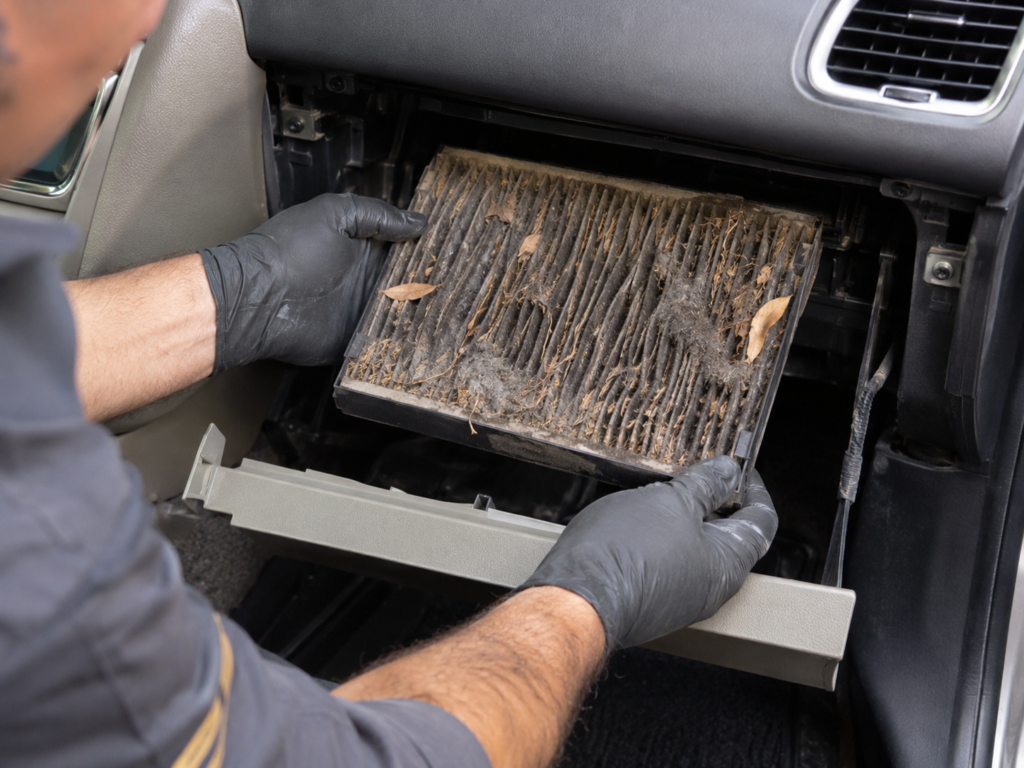
The cabin air filter removes dust, pollen, and other airborne particles before air enters your vehicle’s interior. Over time, the filter can become clogged with debris, restricting airflow through the HVAC system.
Although a dirty cabin air filter does not typically cause the AC to produce hot air directly, restricted airflow can make the cabin feel warmer and reduce overall cooling effectiveness.
Common warning signs include:
- Weak airflow from the dashboard vents
- Reduced cooling effectiveness
- Unpleasant odors when the AC operates
- Excessive dust accumulation inside the vehicle
Potential fix: Replacing a dirty cabin air filter can restore proper airflow and improve overall HVAC performance. If the air remains warm after replacement, additional AC diagnostics may be necessary.
8. A Blocked Expansion Valve or Orifice Tube
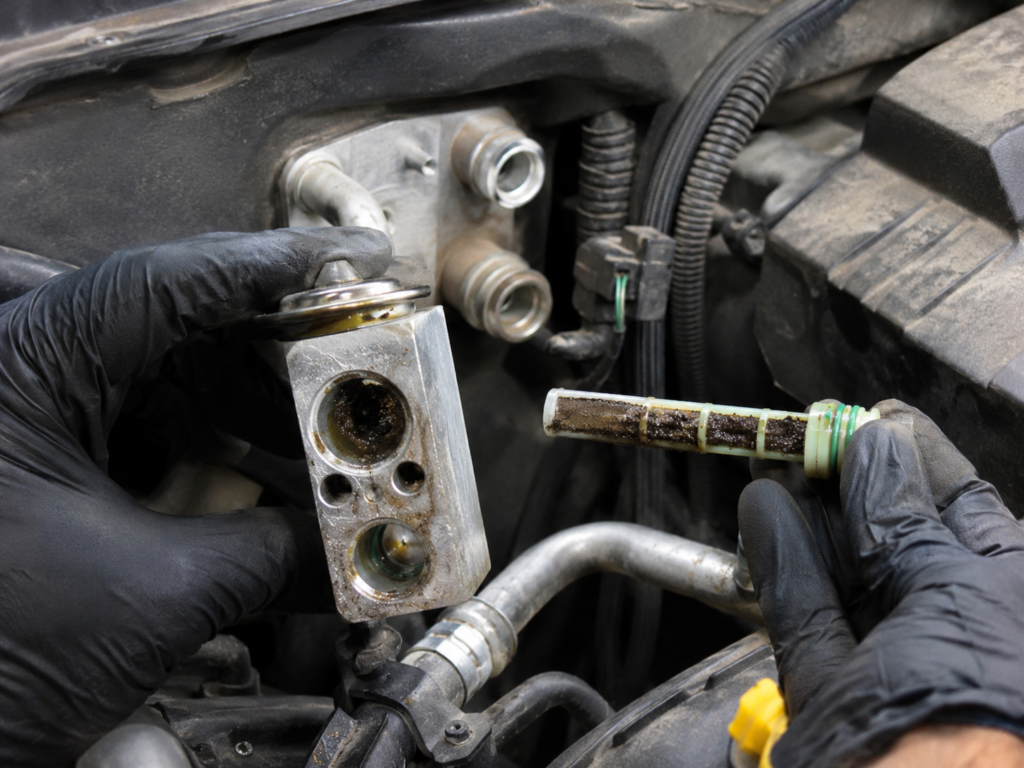
The expansion valve or orifice tube regulates refrigerant flow into the evaporator, where heat is absorbed from the cabin air.
If this component becomes clogged or malfunctions, refrigerant may not flow at the correct rate, causing inconsistent cooling or preventing the system from producing cold air.
Common warning signs include:
- AC cooling intermittently
- Air temperatures fluctuating unexpectedly
- Frost or ice forming on certain AC components
- Reduced cooling performance despite normal airflow
Potential fix: A professional technician can measure system pressures and temperatures to diagnose refrigerant flow restrictions. Repairs may involve replacing the expansion valve, orifice tube, or other affected components.
9. A Malfunctioning Evaporator Temperature Sensor
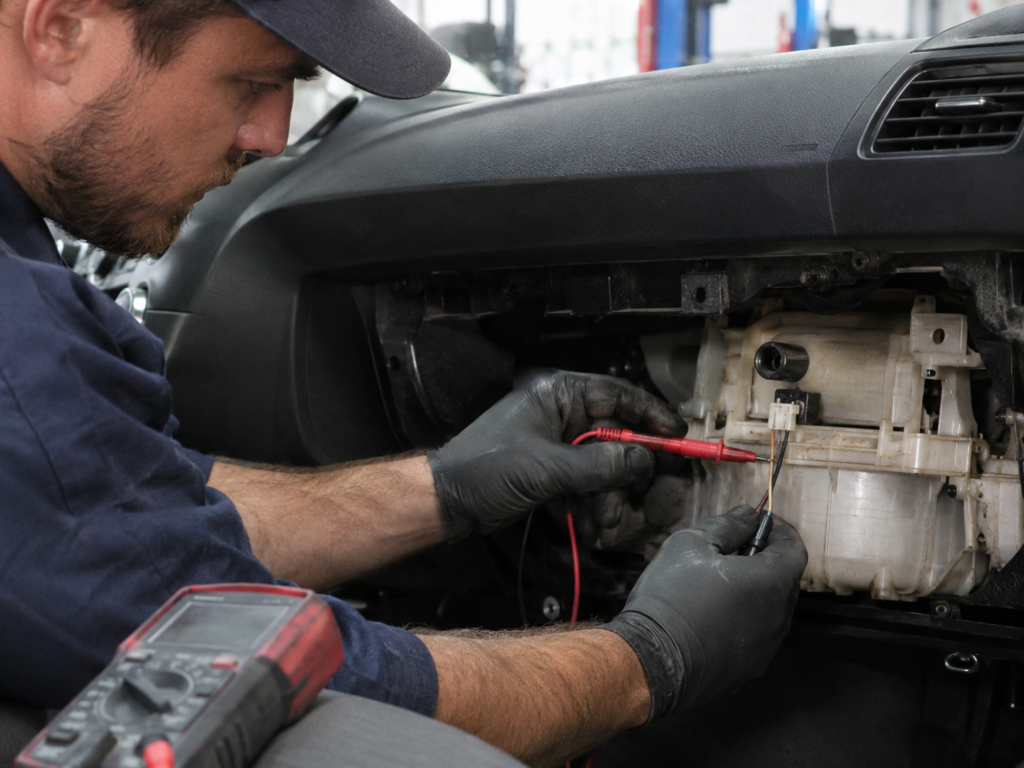
The evaporator temperature sensor helps monitor conditions inside the AC system and prevent the evaporator from freezing.
If the sensor provides inaccurate readings, the system may cycle the compressor incorrectly or interrupt cooling when it is still needed.
Common warning signs include:
- AC blowing cold air initially before becoming warm
- Cooling performance changing unexpectedly
- Compressor operation becoming inconsistent
- Air conditioning working again after the system is turned off temporarily
Potential fix: A technician can evaluate sensor readings and related electrical circuits to determine whether the sensor, wiring, or HVAC control system requires attention.
10. Engine Overheating or Cooling System Problems
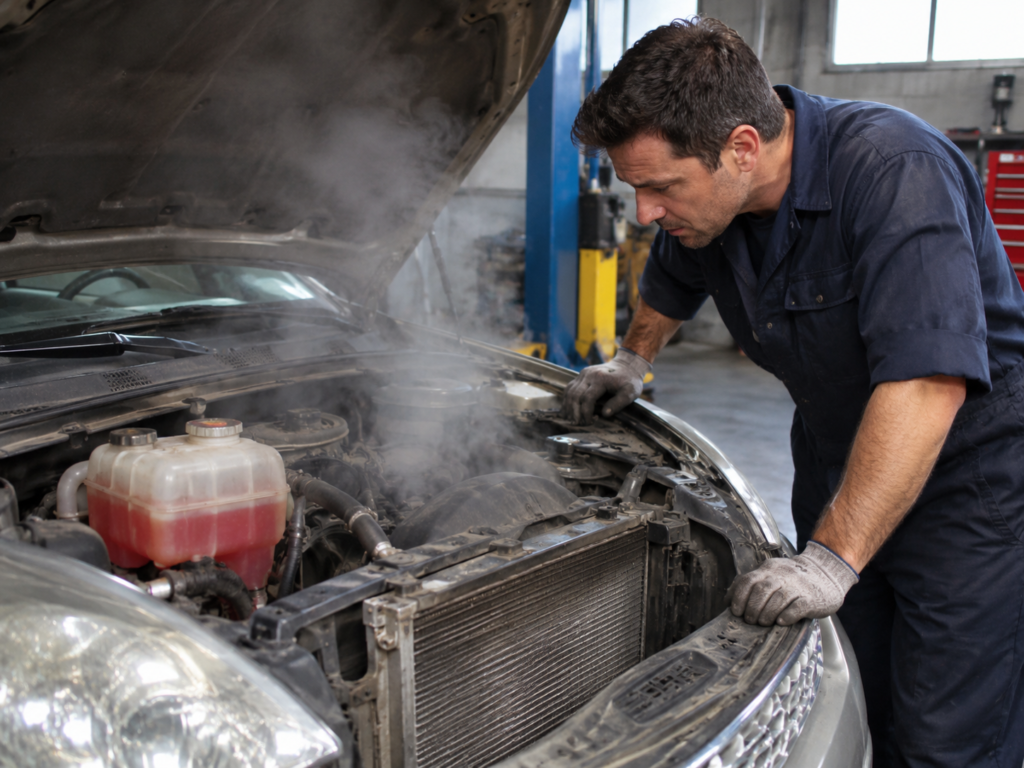
Your vehicle’s engine cooling system can also influence air conditioning performance. When engine temperatures become excessively high, some vehicles automatically reduce or disable AC compressor operation to limit additional engine load.
Problems such as low coolant, a malfunctioning thermostat, or a failing radiator fan can contribute to engine overheating and reduced AC performance.
Common warning signs include:
- AC suddenly blowing hot air while driving
- Engine temperature gauge rising above normal
- Dashboard overheating warnings
- Reduced AC performance during heavy traffic
Potential fix: If your engine begins overheating, turn off the AC and safely pull over as soon as possible. Allow the engine to cool and have the cooling system inspected before continuing to drive, since overheating can cause serious engine damage.
Why Is My Car AC Blowing Hot Air Only While Driving?
Some drivers notice their air conditioning works normally when the vehicle is parked but begins blowing warm air once they start driving. Others experience the opposite problem, with the AC working better at highway speeds than when sitting in traffic.
These differences can provide useful clues about the underlying issue.
AC Blows Cold at Idle but Hot While Driving
If your AC cools properly while parked but begins blowing hot air during acceleration or highway driving, several potential problems could be responsible. These include a compressor control issue, an intermittent electrical connection, refrigerant pressure abnormalities, or an HVAC control malfunction.
Some vehicles temporarily reduce compressor operation under certain engine loads, but persistent warm air during normal driving is not something you should ignore.
AC Blows Hot at Idle but Cold While Driving
If your vehicle’s air conditioning cools better while moving, inadequate airflow through the condenser may be responsible. At highway speeds, outside air naturally passes through the front of the vehicle, helping release heat from the refrigerant.
When the vehicle stops, the system relies more heavily on its cooling fans. If those fans are malfunctioning, the condenser may not receive enough airflow to maintain proper cooling.
AC Starts Cold but Gradually Blows Hot Air
Air conditioning that initially produces cold air but becomes warmer during extended driving may indicate an intermittent compressor problem, evaporator icing, refrigerant flow restriction, or faulty sensor.
Because these symptoms can result from several different issues, professional diagnostic testing is often necessary to identify the cause accurately.
What Should You Do When Your Car AC Is Blowing Hot Air?
If your car’s air conditioning suddenly stops cooling, there are a few simple steps you can take before scheduling professional repairs.
- Check your AC settings. Make sure the air conditioning is activated, the temperature is set to cold, and the system is not accidentally operating in heating mode.
- Try recirculation mode. Recirculating already-cooled cabin air may improve cooling performance during extremely hot weather.
- Evaluate the airflow. Determine whether the vents are producing strong airflow that feels warm or whether airflow itself is unusually weak.
- Pay attention to when the problem occurs. Notice whether the AC becomes warm while idling, accelerating, or driving at highway speeds.
- Listen for unusual noises. Grinding, rattling, or clicking sounds may indicate mechanical or HVAC control problems.
- Schedule a professional AC inspection. If basic setting adjustments do not resolve the issue, have a qualified technician evaluate the air conditioning system.
Avoid attempting to recharge the system repeatedly with store-bought refrigerant products. Overcharging the AC, adding the wrong refrigerant, or introducing sealants can create additional problems and make professional repairs more complicated.
Professional Auto AC Repair in Maricopa, AZ at Copa Mechanic
At Copa Mechanic, we’re proud to serve drivers throughout Maricopa, AZ, with dependable automotive repair and maintenance services backed by over 45 years of experience and ASE Master Certified expertise. Our technicians work on a wide range of domestic and imported vehicles, providing comprehensive repair services and preventive maintenance. As members of the Automotive Service Association (ASA) and ASA Arizona (ASA-AZ), we’re committed to quality workmanship, honest communication, and professional service. We use advanced diagnostic equipment and OEM-quality parts to help keep your vehicle operating safely and reliably.
We also specialize in professional auto AC repair in Maricopa, AZ, helping drivers restore their vehicles’ cooling performance when their air conditioning stops working properly. Whether you’re experiencing low refrigerant levels, a malfunctioning compressor, electrical problems, or inconsistent cooling, our team can inspect your AC system, identify the underlying issue, and recommend the appropriate repairs. We prioritize accurate diagnostics, transparent pricing, and dependable workmanship so you can get back on the road with confidence and enjoy a cooler, more comfortable driving experience.

Schedule Professional Auto AC Repair in Maricopa, AZ Today
If you’re wondering why your car AC blows hot air, the problem could involve anything from a refrigerant leak or faulty compressor to a condenser airflow issue or electrical malfunction. While some problems are relatively simple to correct, others require specialized diagnostic equipment and professional repairs. Identifying the underlying cause early can help prevent additional damage, avoid unnecessary expenses, and restore reliable cooling performance.
At Copa Mechanic, we’re here to help you stay comfortable on the road, even during Arizona’s hottest days. Whether your vehicle’s AC is blowing warm air, cooling inconsistently, or has stopped working entirely, our experienced technicians can provide the professional service you need.
Don’t let a malfunctioning AC system make your daily drive miserable. Contact Copa Mechanic today or call (480) 285-8505 to schedule your professional auto AC inspection and repair in Maricopa, AZ!
FAQs
If your car is blowing hot air when the AC is on, the system may have insufficient refrigerant or a component that is not functioning correctly. A professional AC inspection can help identify the underlying issue and determine which repairs are necessary.
An AC system that initially blows cold air before turning warm may have an intermittent compressor problem, a refrigerant flow restriction, or evaporator icing. These issues can disrupt normal cooling after the system has been running for several minutes.
Yes, low refrigerant levels are one of the most common reasons a car’s air conditioning system stops producing cold air. Since automotive AC systems are designed to be sealed, low refrigerant levels often indicate a leak that should be repaired before recharging the system.
Your car’s AC system should be inspected whenever you notice reduced cooling performance, unusual noises, weak airflow, or inconsistent temperatures. Having the system evaluated before Arizona’s hottest months can also help identify developing problems before they result in a complete loss of cooling.