Seeing your check engine light illuminate on your dashboard can be concerning, especially when your vehicle seems to be running normally. While some causes are relatively minor, others can indicate serious mechanical problems that require immediate attention. Understanding why your check engine light is on can help you recognize potential warning signs, avoid unnecessary repairs, and protect your vehicle from further damage. Below, we’ll explore 10 common reasons your check engine light may activate, what each problem means, and the steps you should take to get your vehicle running properly again.
What Does It Mean When Your Check Engine Light Is On?
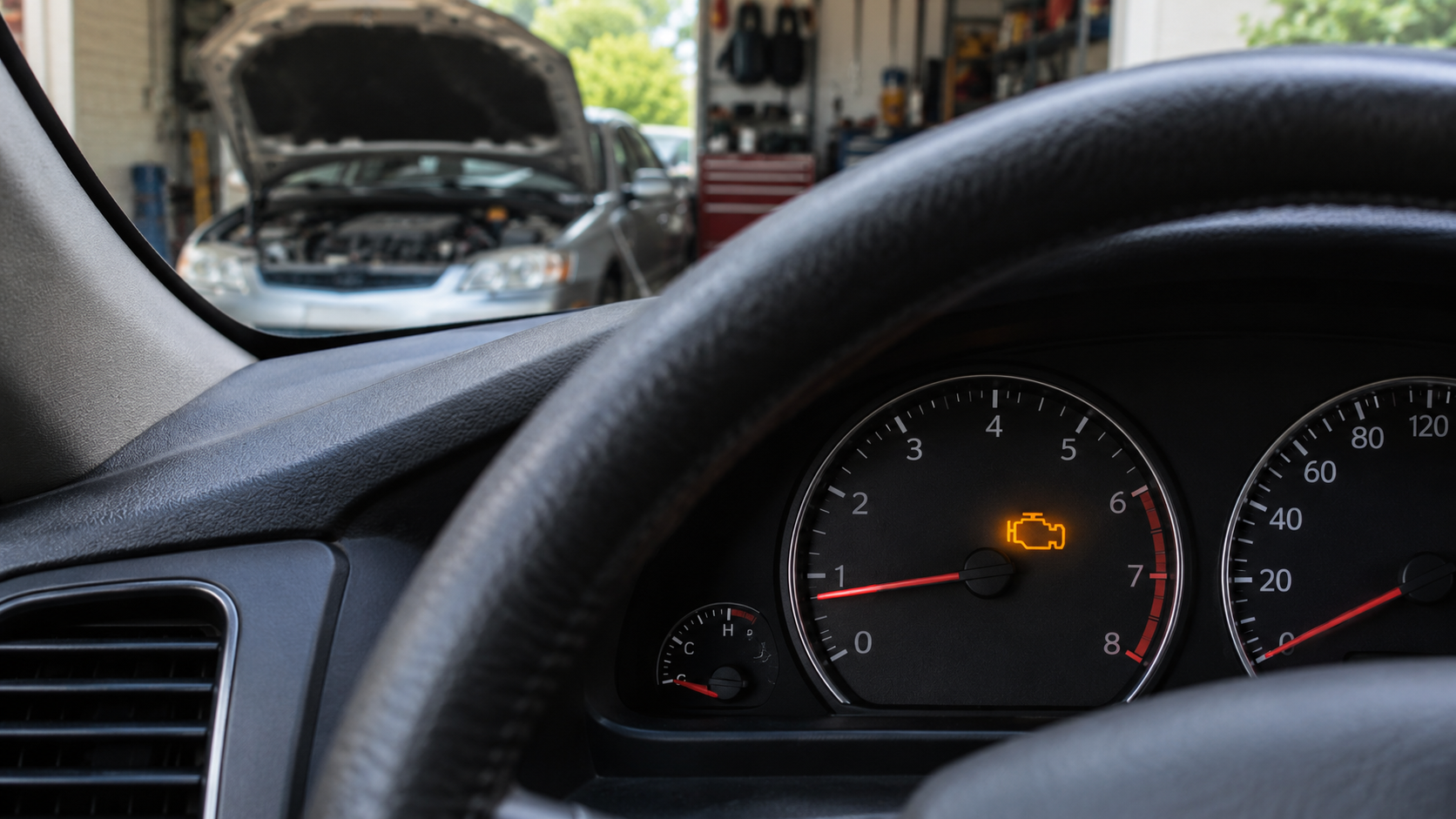
Your vehicle’s check engine light is part of its onboard diagnostic system, which continuously monitors engine performance, emissions controls, and various electronic components. When the system detects an issue that falls outside normal operating parameters, it stores a diagnostic trouble code (DTC) and may illuminate the check engine light.
The warning light can indicate anything from a loose gas cap to a malfunctioning sensor or significant engine problem. However, the light itself does not identify the exact issue, making professional automotive diagnostics essential for determining the underlying cause.
Solid vs. Flashing Check Engine Light: What’s the Difference?
Before investigating why your check engine light is on, it’s important to understand how the warning light behaves.
- Solid check engine light: A steady light generally indicates a problem that needs attention but may not require immediately stopping your vehicle. Schedule a diagnostic appointment promptly, even if your car appears to operate normally.
- Flashing check engine light: A blinking light often indicates a severe engine misfire that could damage the catalytic converter. Stop driving as soon as it is safe to do so, turn off the engine, and arrange professional assistance.
If your vehicle is shaking, losing power, overheating, or producing unusual noises, you should avoid continuing to drive until the problem has been evaluated.
Why Is My Check Engine Light On? 10 Common Causes
If you’re asking, “Why is my check engine light on?” there are several possible explanations. Modern vehicles contain numerous sensors and interconnected systems, meaning even a relatively small malfunction can activate the warning.
Here are 10 common causes drivers should know about.
1. Loose or Damaged Gas Cap
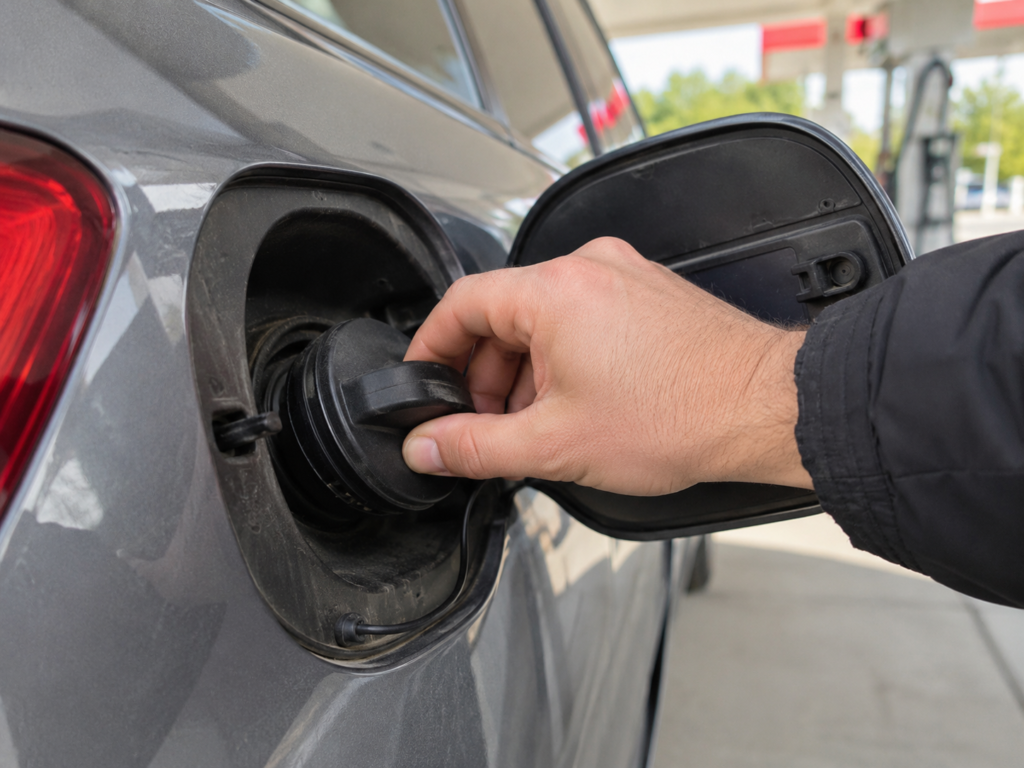
One of the simplest reasons your check engine light is on is a loose, missing, or damaged gas cap. Your vehicle’s evaporative emissions control system (EVAP) prevents gasoline vapors from escaping into the atmosphere. When the gas cap fails to seal properly, the system may detect a vapor leak and activate the warning light.
Common symptoms include:
- Check engine light appearing after refueling
- Loose or improperly secured gas cap
- Visible damage to the gas cap seal
What to do: Check that your gas cap is securely tightened and inspect the seal for damage. If the cap is damaged, replacing it may resolve the issue. The light may take several driving cycles to turn off after the problem is corrected.
2. Faulty Oxygen Sensor
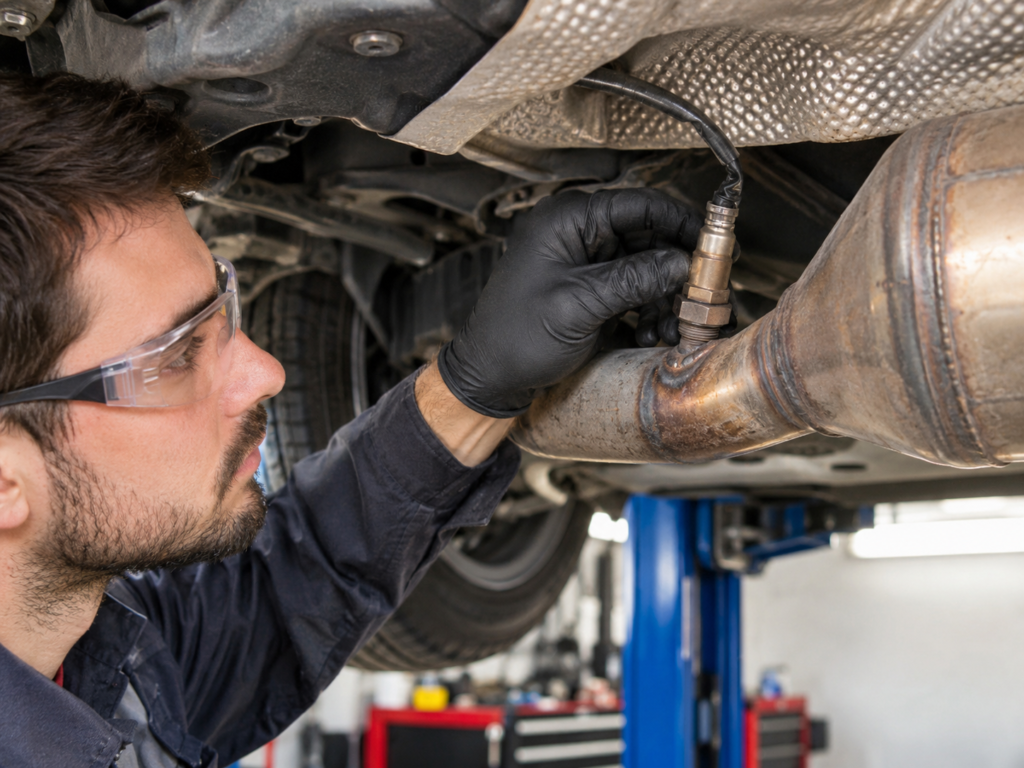
Your vehicle’s oxygen sensors monitor oxygen levels in the exhaust gases to help regulate the air-fuel mixture and evaluate emissions system performance. When an oxygen sensor becomes contaminated or fails, it can send inaccurate information to the engine’s computer. This can affect combustion efficiency and trigger the check engine light.
Common symptoms include:
- Reduced fuel economy
- Rough idling or engine hesitation
- Increased exhaust emissions
What to do: Have a professional mechanic inspect the oxygen sensors and related components. Since exhaust leaks, wiring issues, and fuel system problems can produce similar diagnostic codes, proper testing is essential before replacing a sensor.
3. Worn Spark Plugs or Faulty Ignition Coils
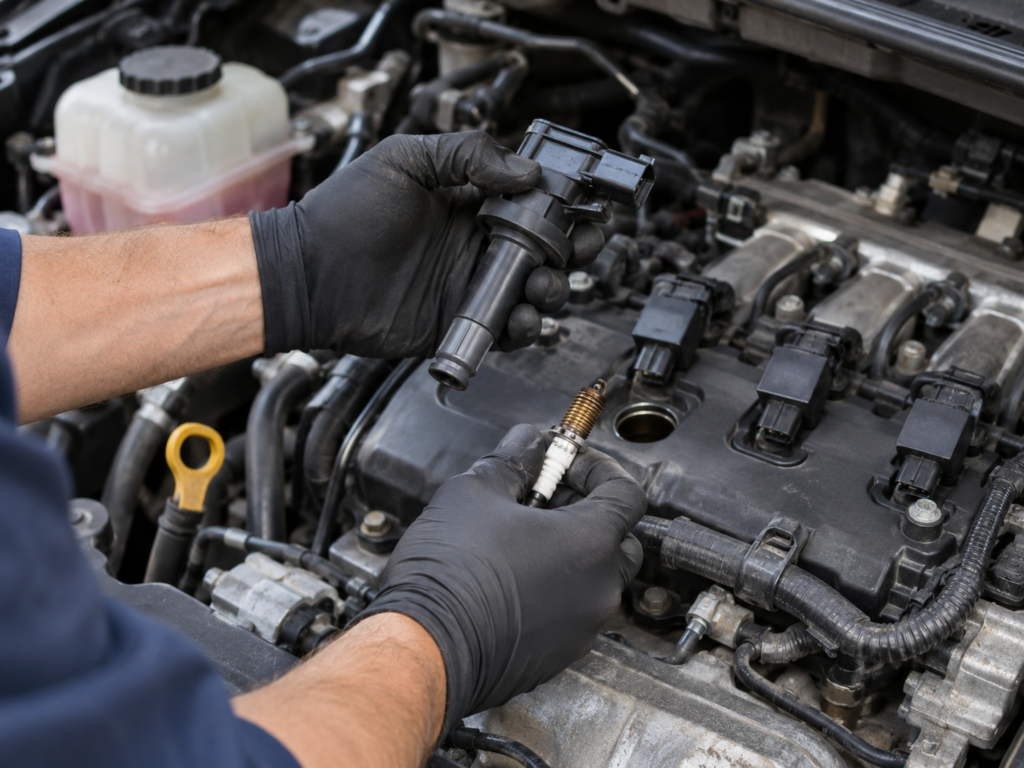
Spark plugs and ignition coils work together to ignite the air-fuel mixture inside your engine’s cylinders. Over time, spark plugs can wear out, while ignition coils may develop electrical problems. When these components fail, incomplete combustion and engine misfires can occur, causing your check engine light to illuminate.
Common symptoms include:
- Rough idling or engine vibrations
- Hesitation during acceleration
- Difficulty starting the engine
What to do: Schedule a professional inspection of your vehicle’s ignition system. A mechanic can test the spark plugs, ignition coils, and related electrical components to identify the source of the misfire and determine which parts require replacement.
4. Failing Catalytic Converter
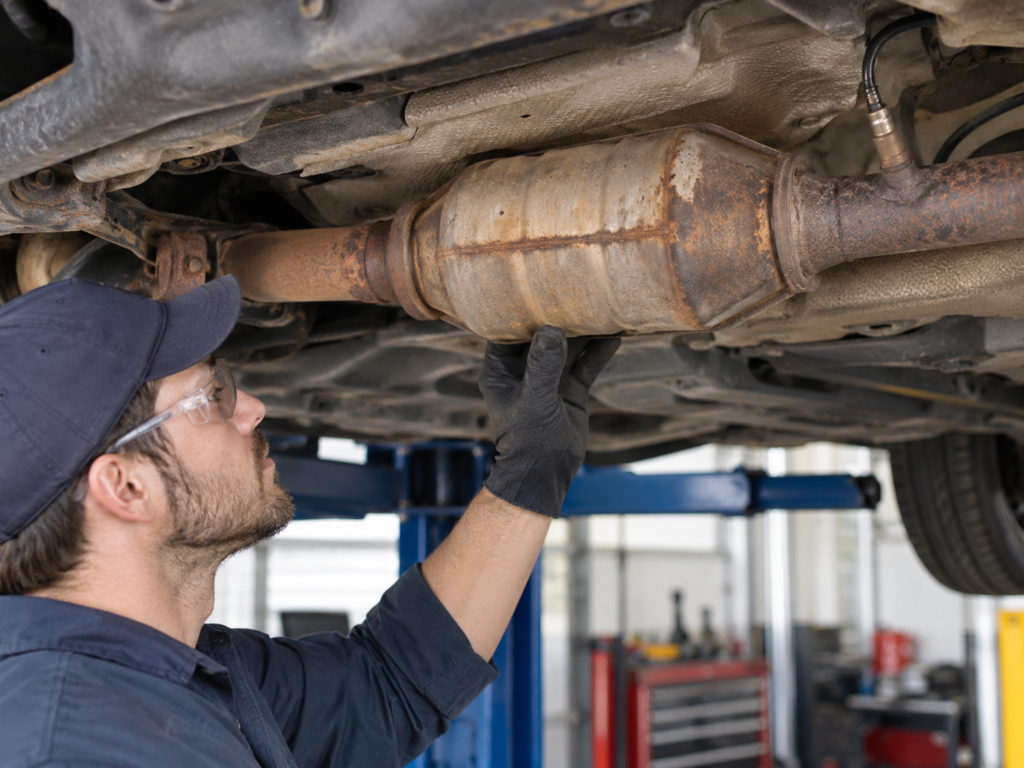
Your vehicle’s catalytic converter plays an important role in reducing harmful exhaust emissions. It converts certain pollutants into less harmful substances before they leave the exhaust system. When the catalytic converter becomes damaged, contaminated, or inefficient, your vehicle’s onboard diagnostic system may detect reduced performance and activate the check engine light.
Common symptoms include:
- Sluggish acceleration or reduced power
- Decreased fuel efficiency
- Unusual exhaust odors
What to do: Have your vehicle’s exhaust and emissions systems professionally inspected. Since catalytic converter problems can develop from unresolved engine misfires or fuel mixture issues, identifying and repairing the underlying cause is essential.
5. Dirty or Failing Mass Airflow Sensor
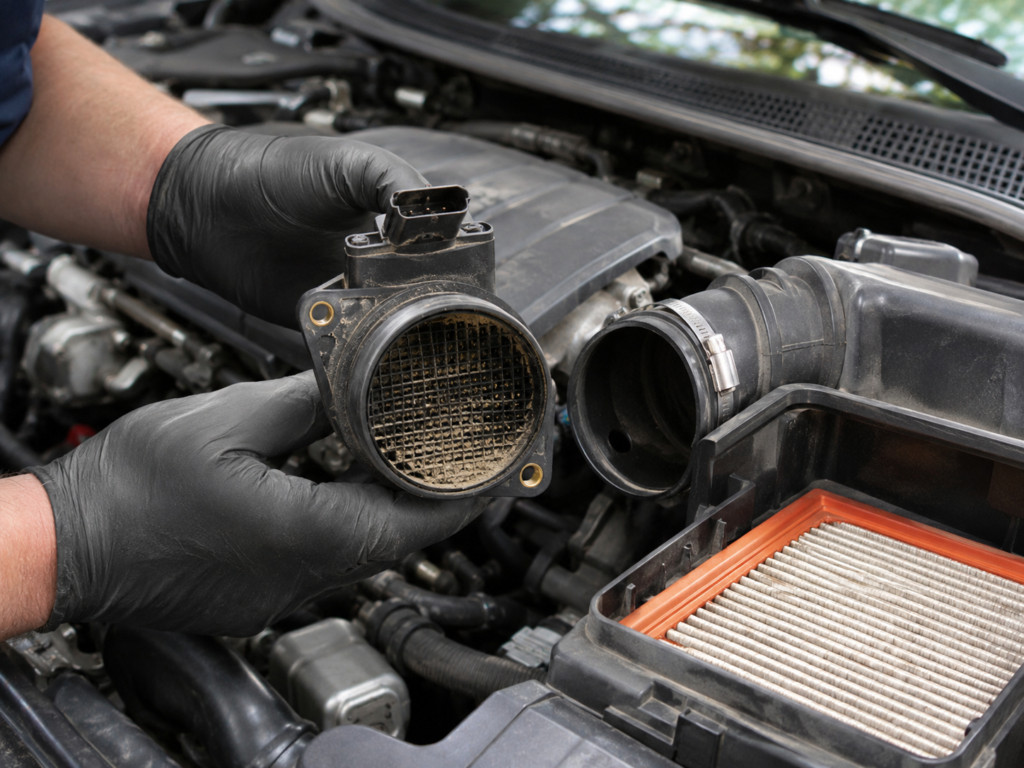
The mass airflow (MAF) sensor measures the amount of air entering your engine, helping the engine’s computer calculate the correct amount of fuel for combustion. When this sensor becomes dirty or malfunctions, it may produce inaccurate airflow readings. This can disrupt the air-fuel mixture, reduce engine efficiency, and trigger the check engine light.
Common symptoms include:
- Rough or inconsistent engine idling
- Hesitation during acceleration
- Reduced fuel economy
What to do: Have the MAF sensor and surrounding air intake components inspected. Depending on the condition, professional cleaning or sensor replacement may be necessary. A technician should also check for intake leaks or damaged wiring.
6. Evaporative Emissions System Leaks
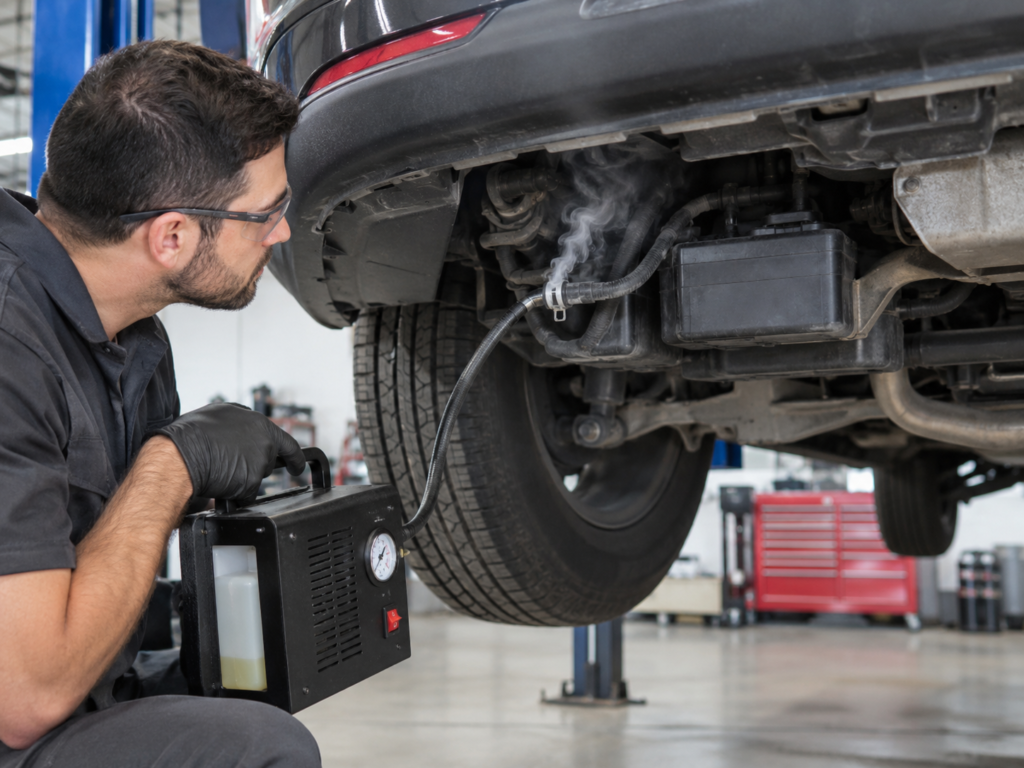
Your vehicle’s evaporative emissions control system captures gasoline vapors and prevents them from escaping into the atmosphere. While a loose gas cap is a common cause of EVAP problems, damaged hoses, faulty valves, and leaking vapor lines can also trigger the check engine light. These problems often occur without noticeable changes in vehicle performance.
Common symptoms include:
- Check engine light without driving problems
- Fuel odors around the vehicle
- Difficulty refueling in some cases
What to do: Schedule an EVAP system inspection to identify potential leaks or malfunctioning components. A qualified technician may use specialized smoke testing equipment to locate small leaks that are difficult to identify through visual inspection.
7. Faulty Fuel Injectors or Fuel Delivery Problems
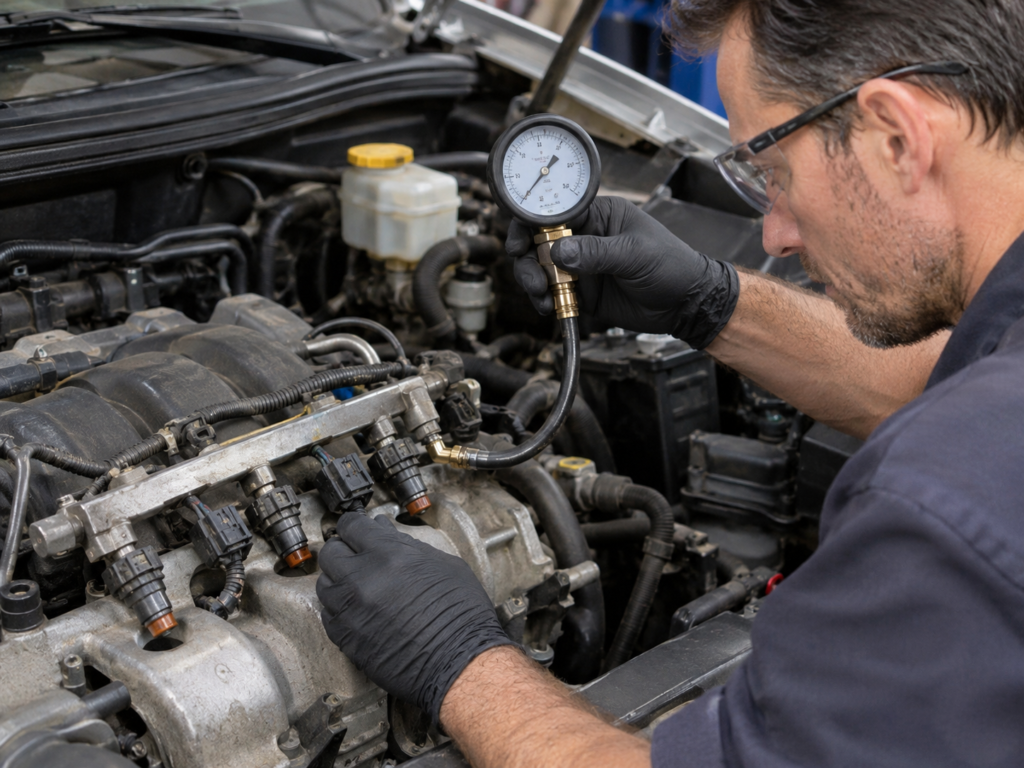
Your vehicle’s fuel system delivers precise amounts of gasoline to the engine for efficient combustion. When fuel injectors become clogged, leak, or develop electrical problems, the engine may receive an inconsistent fuel supply. Fuel pump problems or improper fuel pressure can also disrupt engine performance and activate the check engine light.
Common symptoms include:
- Engine hesitation or stumbling
- Rough idling or difficulty starting
- Reduced acceleration and fuel efficiency
What to do: Have a mechanic evaluate the fuel injectors, fuel pressure, and related components. Professional diagnostic testing can determine whether the problem involves a clogged injector, faulty fuel pump, or another fuel delivery issue.
8. Vacuum Leaks or Intake Air Leaks
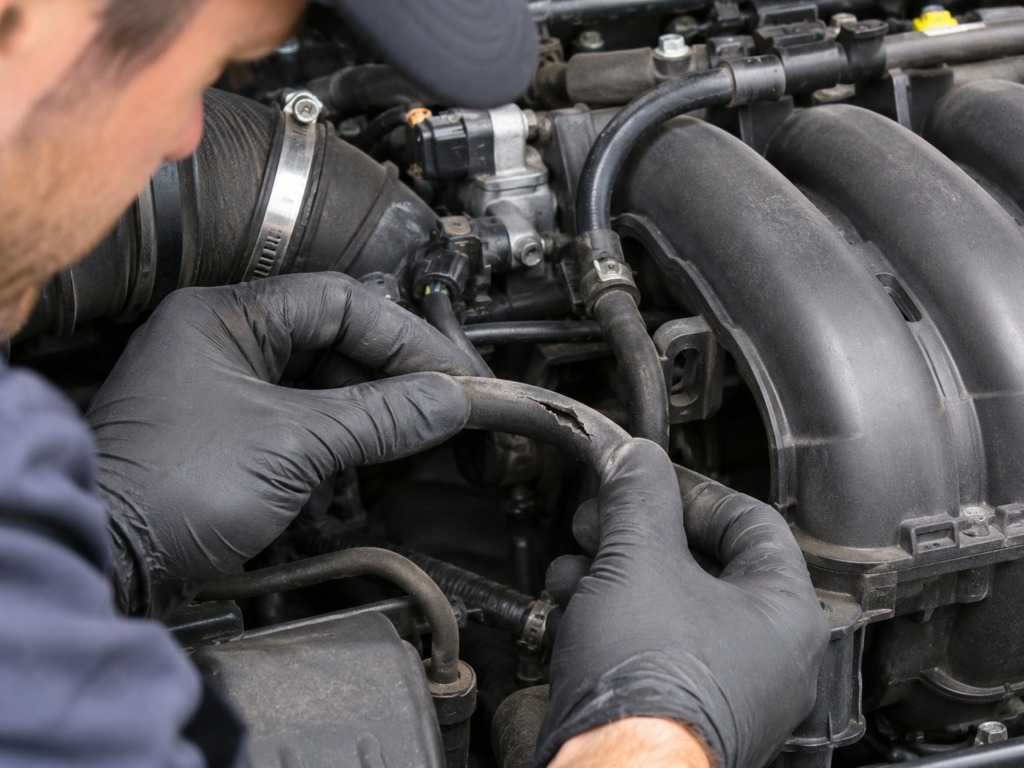
Your engine requires a carefully controlled mixture of air and fuel to operate efficiently. When vacuum hoses, intake manifold gaskets, or other intake components develop leaks, excess unmetered air can enter the engine. This may create an overly lean air-fuel mixture, causing performance problems and activating the check engine light.
Common symptoms include:
- Rough, unstable, or unusually high idle
- Engine hesitation or inconsistent acceleration
- Hissing noises from the engine compartment
What to do: Have your vehicle’s intake system inspected for damaged hoses, loose connections, and leaking seals. A professional mechanic can use smoke testing equipment and other diagnostic tools to locate leaks and recommend repairs.
9. Malfunctioning Exhaust Gas Recirculation (EGR) Valve
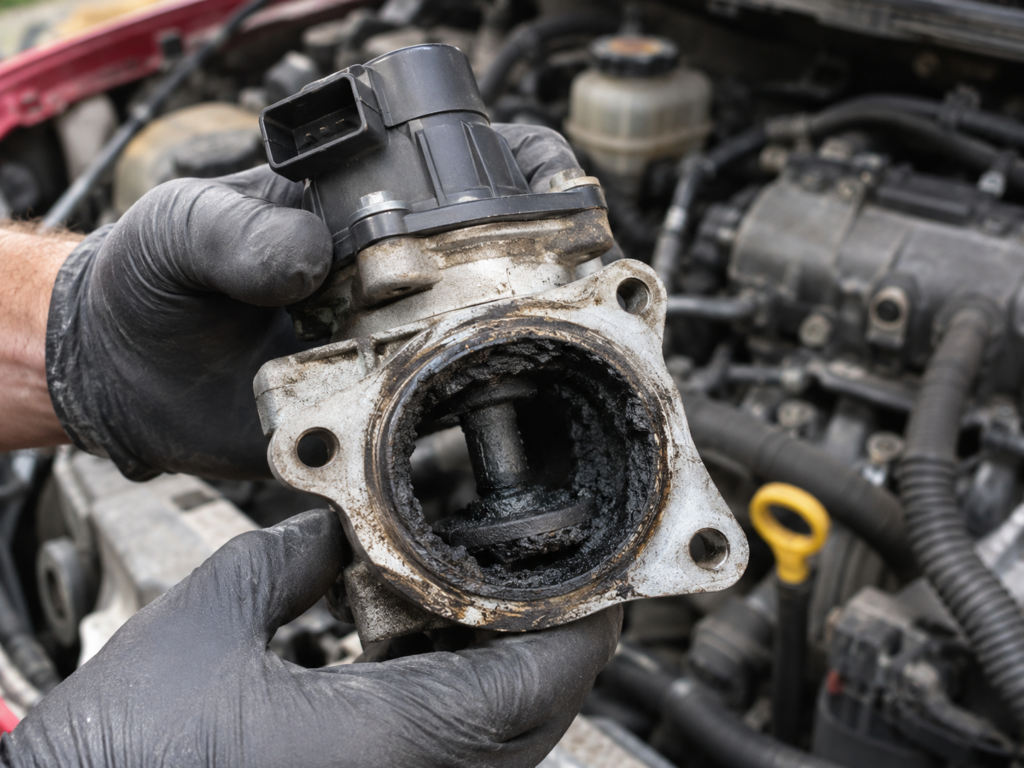
Many vehicles use an exhaust gas recirculation (EGR) system to reduce nitrogen oxide emissions by redirecting a controlled amount of exhaust gas into the engine’s intake. When the EGR valve becomes clogged with carbon deposits or fails to operate correctly, it can interfere with combustion and trigger the check engine light.
Common symptoms include:
- Rough idling or engine hesitation
- Engine knocking under certain conditions
- Increased exhaust emissions
What to do: Have the EGR valve and related components professionally inspected. Depending on the diagnosis, cleaning carbon buildup or replacing a malfunctioning component may restore proper operation. Some vehicles use different emissions control designs without a conventional EGR valve.
10. Faulty Engine Sensors or Electrical Components
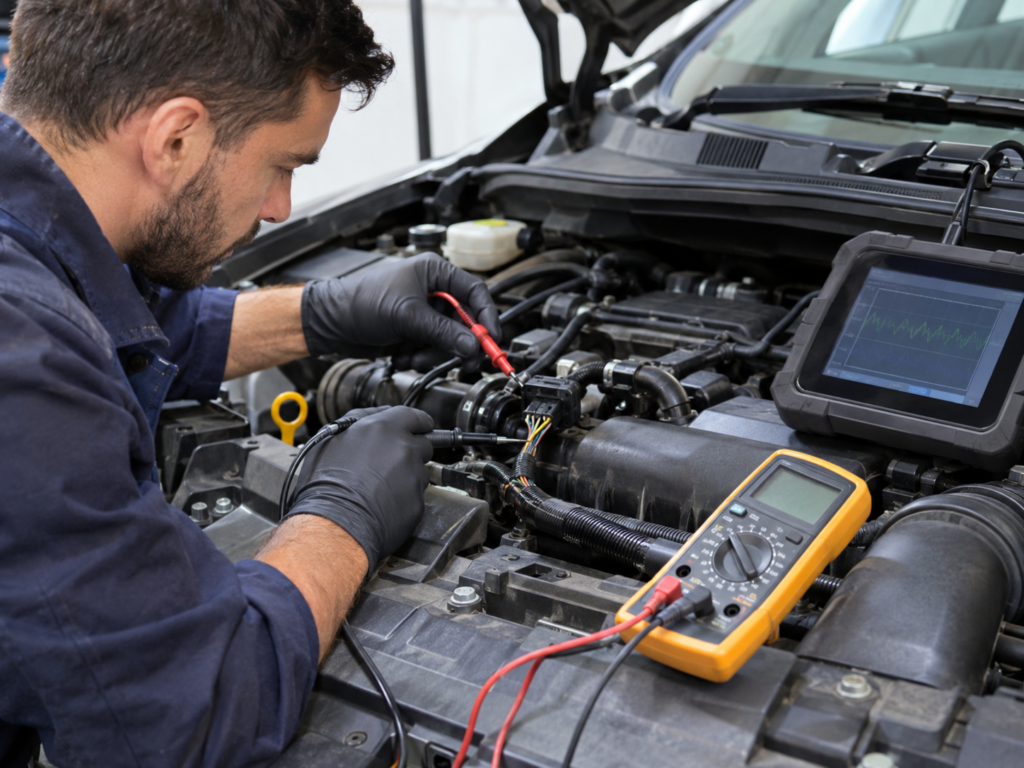
Modern vehicles rely on numerous sensors and electronic components to monitor engine performance and manage critical operating functions. Malfunctioning crankshaft position sensors, camshaft position sensors, coolant temperature sensors, or damaged wiring can disrupt communication with the engine control module. These problems may cause intermittent performance issues and activate the check engine light.
Common symptoms include:
- Intermittent stalling or difficulty starting
- Rough idling or inconsistent engine performance
- Multiple or recurring diagnostic trouble codes
What to do: Schedule a comprehensive automotive diagnostic inspection to identify the malfunctioning component. A qualified technician can analyze sensor readings, test electrical connections, and inspect wiring to determine the underlying cause before recommending repairs.
What Should You Do When Your Check Engine Light Is On?
Knowing how to respond when your check engine light activates can help prevent additional mechanical problems and unnecessary expenses.
Follow these steps when you notice the warning:
- Check whether the light is solid or flashing. A flashing light requires more urgent attention because it may indicate a severe engine misfire.
- Pay attention to how your vehicle is performing. Watch for rough idling, unusual noises, reduced power, overheating, or other changes in driving behavior.
- Inspect your gas cap. If the warning appeared after refueling, confirm that the cap is securely tightened and undamaged.
- Avoid unnecessary driving if symptoms are present. Continuing to operate a vehicle with significant performance problems can increase the risk of damage.
- Schedule a professional diagnostic inspection. A qualified technician can retrieve stored trouble codes, inspect relevant systems, and determine which repairs are necessary.
Avoid simply clearing the diagnostic codes to turn off the warning light. Resetting the system without correcting the underlying problem does not constitute a repair, and the warning may return.
Trust Copa Mechanic for Professional Check Engine Light Diagnostics in Maricopa, AZ
At Copa Mechanic, we’re proud to provide reliable automotive repair and maintenance services to drivers throughout Maricopa, AZ. With over 45 years of automotive experience and ASE Master Certified Technicians, our team has the knowledge and expertise to service a wide range of domestic and imported vehicles. As members of the Automotive Service Association (ASA) and ASA Arizona (ASA-AZ), we’re committed to maintaining high standards of automotive service, integrity, and customer care. From routine maintenance and complex repairs, we use modern diagnostic technology and OEM-quality parts to help keep vehicles operating safely and reliably.
If your check engine light is on, our professional check engine light diagnostic service can help identify the underlying problem. Rather than guessing which component needs replacement, our experienced technicians use advanced scan tools, electrical testing equipment, and comprehensive inspection procedures to determine why your vehicle’s warning light has activated. We believe in transparent communication, honest pricing, and practical repair recommendations that help our customers make informed decisions about their vehicles.

Check Engine Light Is On? Schedule a Diagnostic Appointment at Copa Mechanic Today
Understanding why your check engine light is on is the first step toward protecting your vehicle’s performance, reliability, and long-term condition. Whether the cause is a loose gas cap, malfunctioning oxygen sensor, worn spark plugs, or a more serious engine issue, an accurate diagnosis is essential for determining the right solution.
At Copa Mechanic, we’re here to help Maricopa drivers get dependable answers and professional automotive repairs without unnecessary guesswork. If you’re wondering, “Why is my check engine light on?” don’t ignore the warning or wait for a minor issue to become a costly repair. Contact Copa Mechanic today or call (480) 285-8505 to schedule a professional check engine light diagnostic appointment and get your vehicle back on the road with confidence.
FAQs
Your check engine light may illuminate even when your vehicle appears to operate normally because certain problems, such as faulty oxygen sensors or evaporative emissions leaks, do not always produce noticeable symptoms. Scheduling a professional diagnostic inspection can help identify the underlying issue before it develops into a more serious problem.
Common reasons include a loose gas cap, faulty oxygen sensor, worn spark plugs, or problems with the evaporative emissions system. The exact cause varies by vehicle, making professional diagnostic testing the most reliable way to identify the issue.
If your check engine light is solid and your vehicle is operating normally, you may be able to drive a short distance to a repair shop. However, if the light is flashing or your vehicle is experiencing significant performance problems, stop driving as soon as it is safe and seek professional assistance.
A check engine light may turn off automatically if the underlying problem is temporary or has been corrected and the vehicle completes the necessary diagnostic checks. However, the light turning off does not always mean the problem has been permanently resolved, so recurring warnings should be professionally evaluated.